The cave was real first
#history #internet #OnyxAudit
At the end of the 1960s, the ARPANET ran on a small number of machines called Interface Message Processors, and the software inside them was written by a man at Bolt Beranek and Newman named Will Crowther. They were the first routers. Every packet that reaches you today, including the one carrying this sentence, descends from that layer, and the layer exists to do one thing: carry a message between two ends that have no way to touch each other directly.
Roughly six years later, the same man wrote the first thing on that network you could speak to.
He did not write it for the network. He wrote it for two daughters who no longer lived with him, and who came to visit. The divorce had taken the caving with it, so he built a cave in his living room, on a teletype wired to the machine at work, and when they came he could take them down into it again. He built himself a way to be in the room.
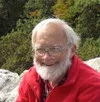
Will Crowther, 2012. Source: Wikimedia. CC0.

The cave was real first
The cave in the game is a real cave. Not a cave-like place, not an impression of one. Crowther and his wife Pat were both serious cavers, and in their own time they surveyed and mapped sections of the Mammoth and Flint Ridge systems in Kentucky for the Cave Research Foundation. The survey map of Colossal Cave carries both their names.
The method matters more than the fact. He kept an ASR33 Teletype in his living room, wired through to a machine at work, and he and other cavers used it to type up survey data after trips. Pat wrote the program that read the data back out and plotted the maps. The passages, the junctions, the distances: measured underground, entered by hand, drawn by software.
When he came to write the game, he already had the geography. He was not imagining a cave. He was reading his own field notes and turning the survey into prose, keeping real room names as he went.
The proof of it came from the people best placed to check. Pat first encountered the game at a Cave Research Foundation meeting in Boston, a year or two after he wrote it, and cavers who knew the system confirmed that the layout matched Crowther's own maps and descriptions.
[ASR-33_at_CHM]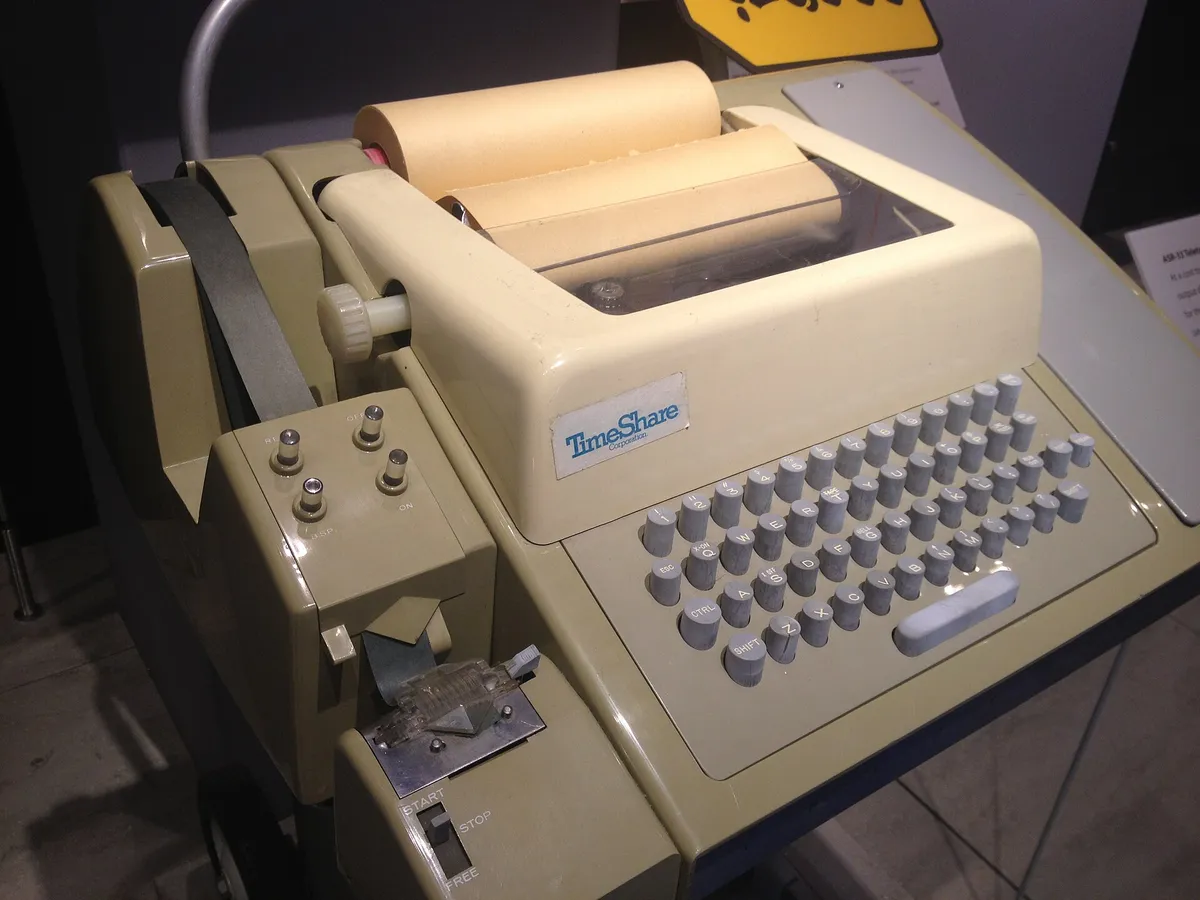
An ASR-33 Teletype. Ten characters a second, printing to paper. Source: Wikimedia. LICENCE.

He described what he was doing as a re-creation in fantasy of his caving. The fantasy part is what everyone remembers. The re-creation part is the harder achievement, and it is the part nobody credits him for.
The interface was the problem
The design problem Crowther set himself was not the cave. It was the interface.
Everything on a PDP-10 in 1975 was reached by typed command, and typed commands were unforgiving. You learned the syntax or you got nothing. Crowther went the other way deliberately, and said so: he wanted input in ordinary English, because the alternative would be intimidating to people who did not work with computers.
That sentence is the whole design. He was writing for people who had never touched a machine, on a machine that had never been asked to accommodate them.
What he built to do it was a two-word parser. Verb and noun. TAKE LAMP. OPEN GRATE. Each room, each object, each state held in tables he could index into, with the vocabulary carried as a list of words mapped to numbers. Compass directions came late in development, which tells you he was still working out how movement should feel while the cave itself was already mapped.
The output side is the part people underrate. Rooms you pass back through carry two descriptions, a full one and a short one. Twenty-seven of the seventy-nine have both; dead ends and death messages have only the long form. Internet Archive text copy
A player walking a familiar passage is not made to read the same paragraph again. On a teletype printing to paper at ten characters a second, that is not a stylistic nicety. It is the difference between a place you can move through and one you cannot.
None of this existed to be copied. There was no genre, no prior art to lean on, no convention for what a computer should say when it did not understand you. He was deciding, in a numerical programming language on a shared machine, what a machine should sound like when a person speaks to it in their own words.
It is worth being concrete about the constraints. FORTRAN on a PDP-10 has no string handling worth the name; he was building a text parser and a room-and-object state machine in a language designed for arithmetic. Shared machine. No screen. No scrolling back. Every test run costs paper and time. He did it in his spare time, and it came to something on the order of seven hundred lines.
It survived because it was cheap to copy
Crowther did not stay to watch what happened. He left the program in a public directory, moved to Xerox in California, and stopped thinking about it.
It travelled without him. A copy reached the Stanford Medical Center's machine by a route nobody has ever established. A graduate student there mentioned it in earshot of Don Woods, who asked for a copy to try on the Stanford AI Lab system. It did not run properly, because the operating systems differed. Woods got it working anyway.
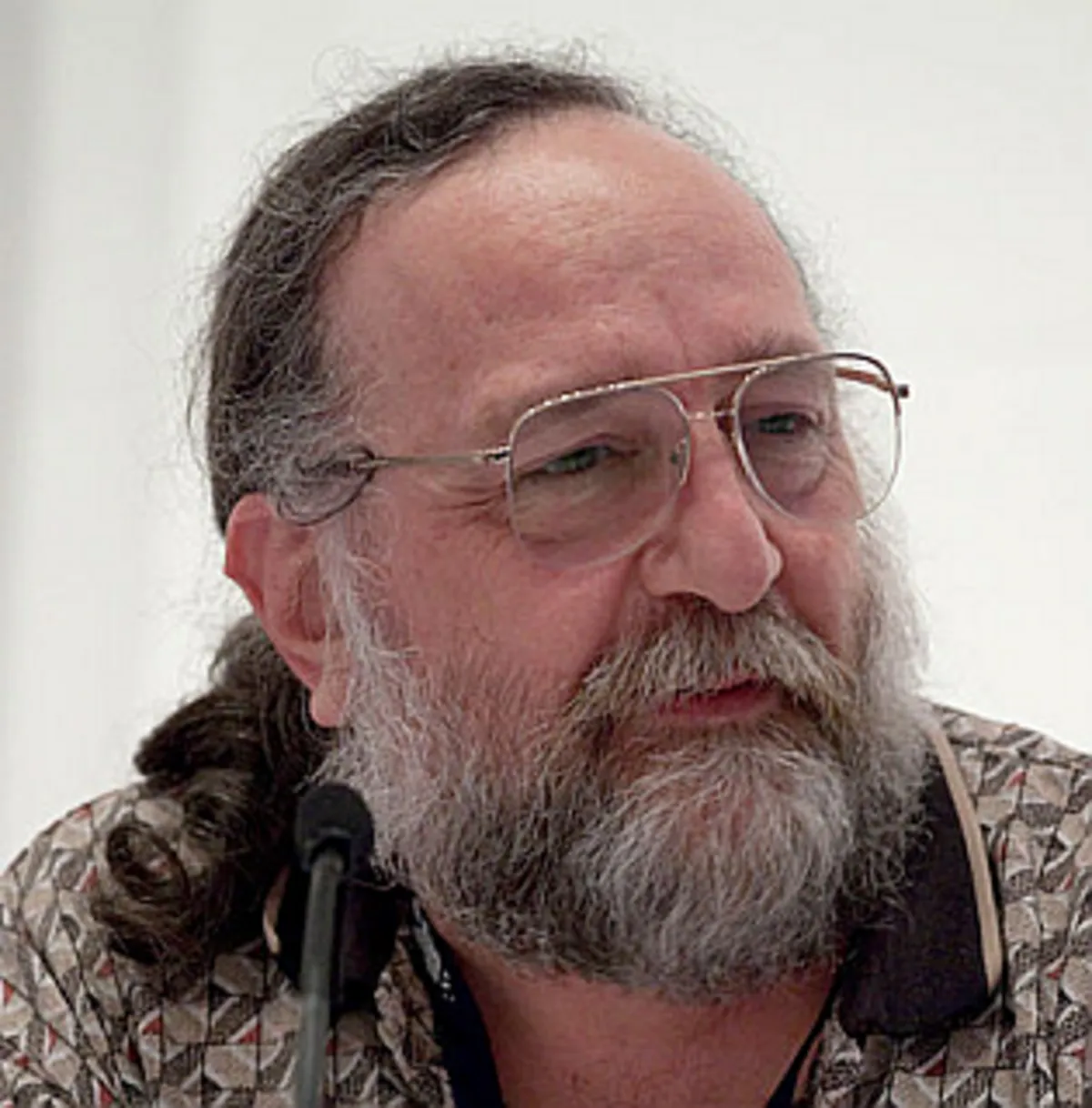
Don Woods. Source: Wikimedia. LICENCE.

He wanted to extend it, and the program told him who had written it. It did not tell him how to reach the man. So Woods sent mail to crowther@ every host on the ARPANET, one after another. Several bounced back from sites with nobody by that name. One did not. Crowther replied and sent him the source himself and gave his address. He had spent a week discovering what a program looks like when it credits an author it gives you no way to reach, and he did not repeat it. The version Woods shipped named himself and gave his address. He had spent a week discovering what a program looks like when it credits an author it gives you no way to reach, and he did not repeat it.
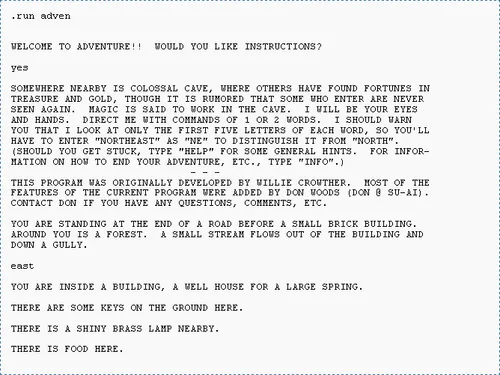
Terminal output of the 1977 version, crediting Crowther and Woods
The 1977 Crowther and Woods version. It names Crowther as the original developer, names Woods, and gives his address at SU-AI. Source: Wikimedia. LICENCE.

That is the whole mechanism of survival, and it is not reverence. Nobody was preserving this. It moved because it was small, plain, and cost nothing to copy, and because one man answered an email from a stranger who had no business knowing where to find him.
Woods roughly doubled it. By 1977 tapes were circulating through the DEC user group, and it kept moving from there, ported and re-ported into every language and onto every platform that came afterwards.
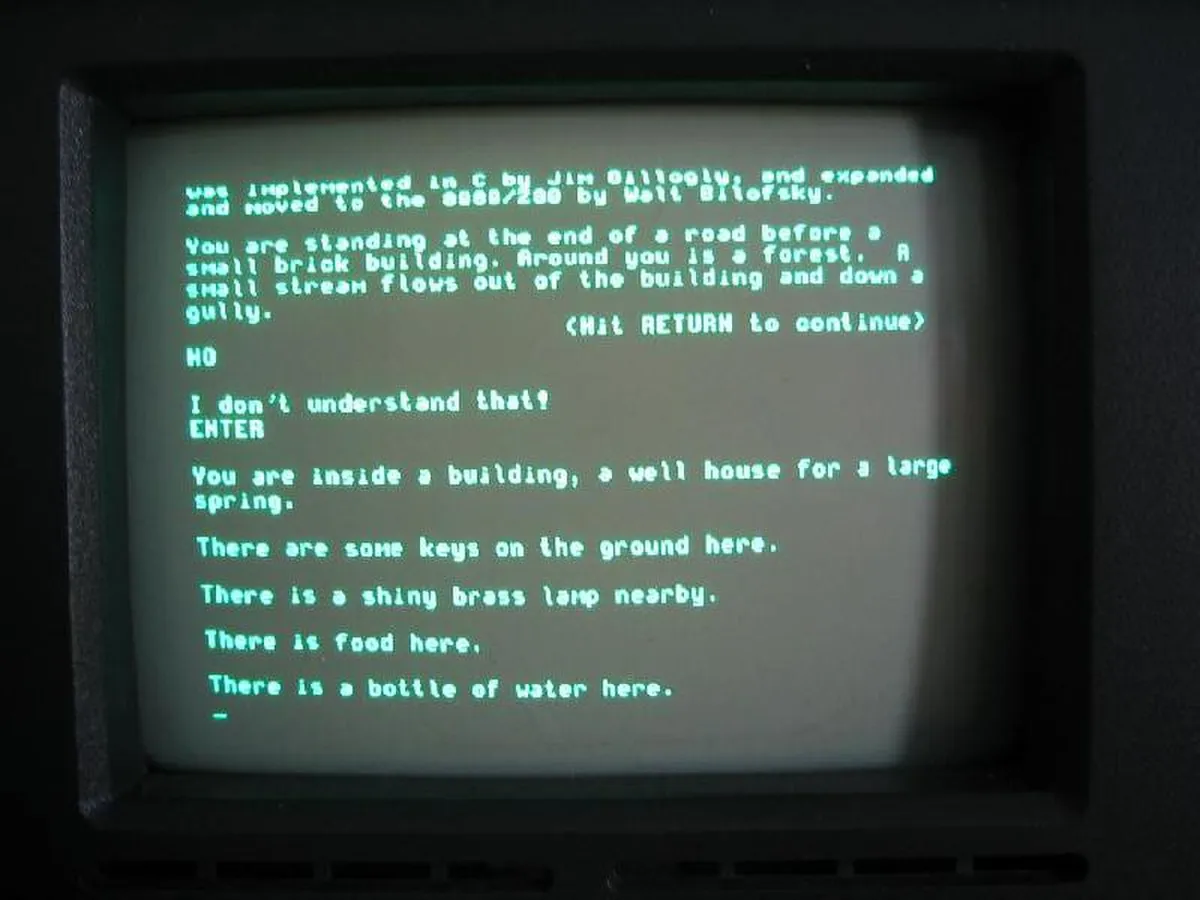
The C version running on an Osborne 1, circa 1982
The C version on an Osborne 1, circa 1982. The screen credits Jim Gillogly, who implemented it in C, and Walt Bilofsky, who moved it to the 8080. Photo by Celcom at the English Wikipedia, CC BY-SA 3.0. Source: Wikimedia.

Thirty years later, when Dennis Jerz went looking for Crowther's original code, he did not find it in an archive. He found it because he kept asking, of a thirty-year-old machine, the question everyone else had assumed was already answered. He found it on a backup of Woods's old student account at Stanford, sitting where nobody had thought to look, because nobody had thought to delete it either.
Format outlives platform. Plain text on a forgotten disk outlived the PDP-10, the ARPANET, the lab, and the company. It will outlive this blog.
I wrote the other half of this yesterday without noticing it was the other half. An instruction set into a metal disc: no server, no certificate, no expiry, waiting for a machine that has not been built yet to look at it and decide what it means. That piece was about a threat. This one is about an inheritance. The mechanism underneath is the same. The author leaves, and the meaning keeps working without them.
What is not in this piece
Two things I could have used and did not.
I have not named Crowther's daughters, although the record does. Whether they want to be part of a stranger's essay is not my call to make, and public availability is not the same thing as being mine to publish.
I wrote privately to his family before writing any of this. I am not going to tell you what I said. The letter asked for nothing, and printing it would retroactively turn it into an ask.
The rule is the same one I apply to a vendor. Go directly, go privately, publish only what was already public.
Source ledger
Tier A, verified against primary or near-primary sources.
- Crowther wrote the IMP software at BBN, the firmware for the first routers. Multiple corroborating accounts.
- The joint Will and Pat Crowther survey map of Colossal Cave for the Cave Research Foundation, per Dennis Jerz, Somewhere Nearby is Colossal Cave, Digital Humanities Quarterly 1.2 (2007). Bedquilt is a section of Colossal Cave, not a separate nearby cave, contrary to widespread claims.
- Development during the 1975 to 1976 academic year, abandoned early 1976. Jerz, corroborated in correspondence: Crowther's sister spent her sabbatical with him that year and confirms he was developing the game at the time. Crowther's own answer to Jerz was 1975, give or take a year.
- Woods found the game early in 1976, March or April, after another student found it on the Stanford Medical Center's computer. Woods, interviewed by L'avventura è l'avventura, June 2001.
- The crowther@ every-host email, in Woods's own words, same interview. He received several bounces and eventually heard from Crowther, then at Xerox, who sent him the source.
- The living room teletype, survey data entry, Pat's plotting program, and retained real room names.
- The original code recovered from a backup of Woods's Stanford student account.
- Own observation. Link-rot spot check, eight linked sources from the Colossal Cave Adventure source page, with one control. Recorded 2026-08-08 00:49 SAST. Full record, method and screenshots: https://github.com/Baximus855/onyx-observations/
- Room descriptions carry two forms in Crowther's original: a long description in section 1 of the data file, and a short form in section 2. Twenty-seven of the seventy-nine rooms have both. Verified directly in advdat.77-03-11, retrieved 2026-08-08 from the Internet Archive text copy of Crowther's Original Adventure.
- The game explains the mechanic to the player: one message states that more detail is not available and that the long description will be repeated instead. Same file, section 6.
- The opening text names Crowther as the recipient of errors, suggestions and complaints, and gives no address. This is what left Woods with a name and no way to reach it. Same file, section 6.
Tier B, credible but unresolved.
- The route by which a copy reached the Stanford Medical Center machine. Nobody has established it.
- Whether the program was playable on a Stanford machine as early as 1975. Jerz notes that if surviving Stanford backups ever showed this, it would rewrite the timeline. Unexamined.
Corrected in the course of writing this.
- The commonly repeated 1977 date for Woods finding the game appears to be repetition rather than evidence. Jerz's assessment, and Woods's own account give 1976.
- The claim that Woods modelled the volcano on Tolkien's Mount Doom is denied by Woods directly. He says Tolkien was only very indirectly an influence and that he had never played D&D at the time.
- The claim that Crowther's original was a bare map that Woods turned into a game overstates it. Jerz, working from the recovered code, finds treasures and puzzles already present. Woods, recalling 25 years later, remembered almost no puzzles. Recovered code beats recollection.
My thanks to Dennis Jerz, who answered two sourcing questions from a stranger in South Africa within ninety minutes, and answered them with evidence rather than lore..
Fifty years on, in Pinetown, South Africa, I typed GO NORTH and something came back.
Clayton Bax
Published under ONYX Digital Intelligence Following the #OnyxAudit methodology.
- X: @onyxaudit
- Email: onyxdigitalintelligence85@protonmail.com
- https://github.com/Baximus855
- @Onyx_Digital@mastodon.social
"Adjacent to true is not true."
Truth has no flag nor favour, only a standard. And it's heavy