Same Surname, Wrong Man, Bigger Chair
On 25 November 2026, within the span of a single afternoon, two South African news stories landed in the same live search index.
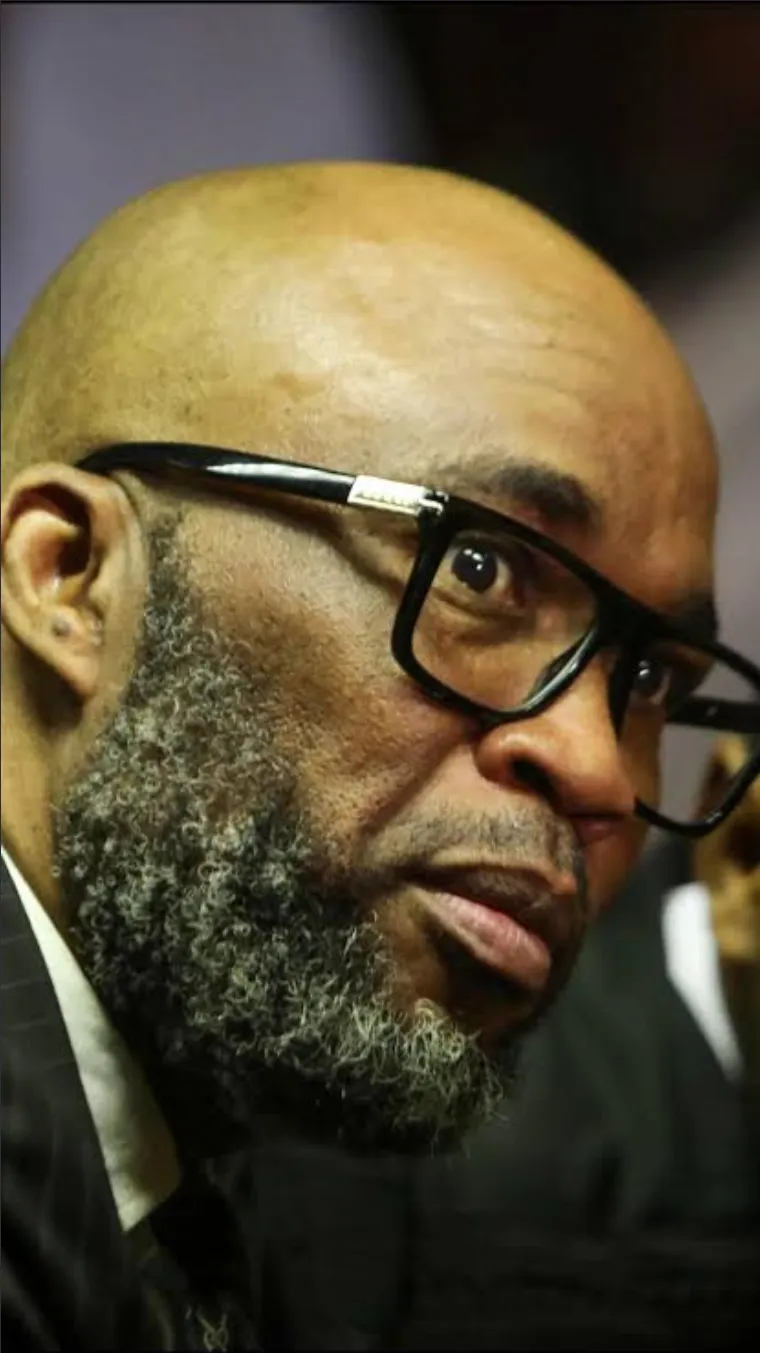
In the first, national media reported that dismissed former Ekurhuleni Metro Police Department (EMPD) Deputy Chief Julius Mkhwanazi had collected R1.2 million from ratepayers while sitting in custody. His charge sheet spans five arrests across five criminal cases, including a murder docket that had just been back in the Brakpan Magistrate's Court the day before, alongside fraud, impersonation, and testimony linking him to Vusimuzi "Cat" Matlala's blue-lights scandal at the Madlanga Commission.
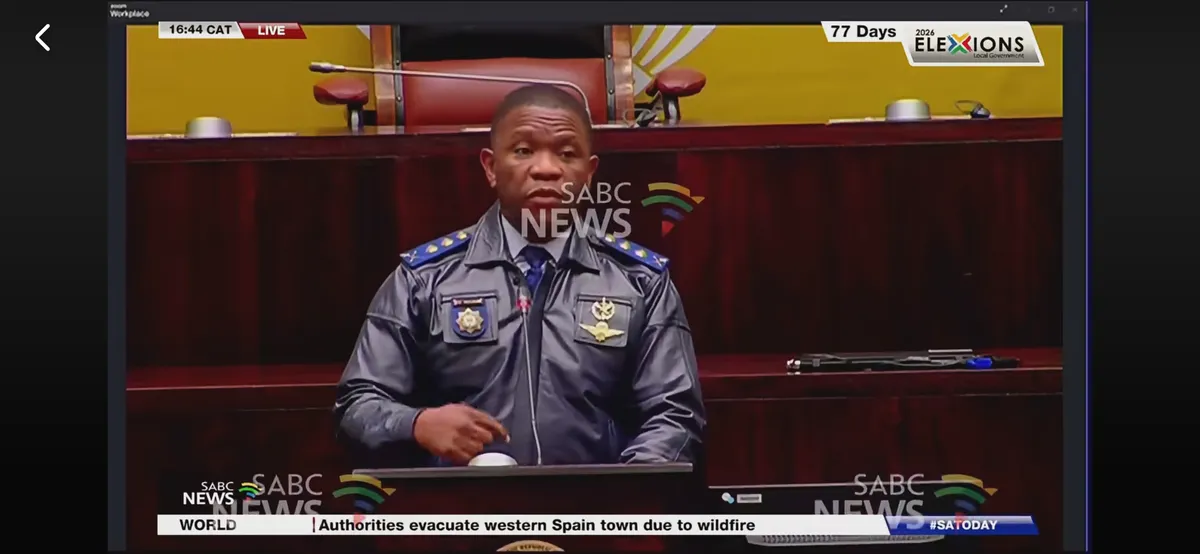
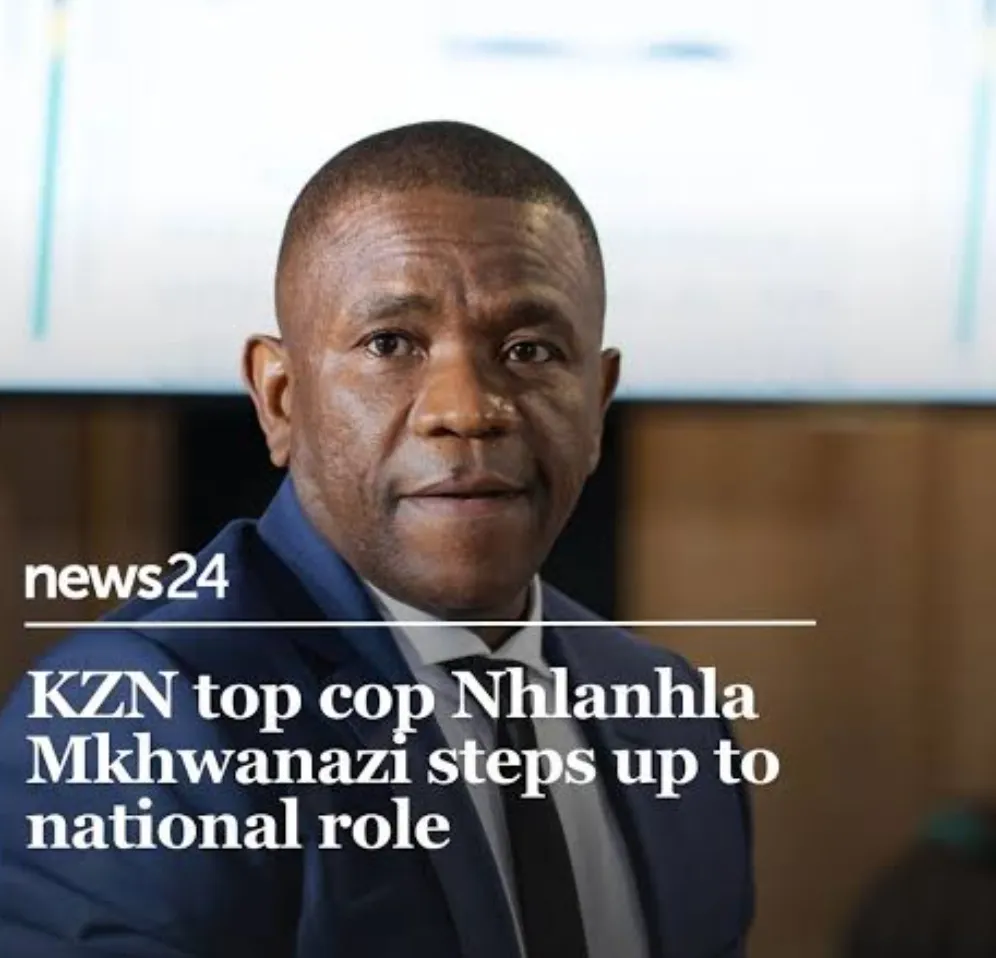
Less than three hours later, Acting Police Minister Firoz Cachalia stood up in Parliament and confirmed that Cabinet had approved his recommendation to appoint KwaZulu-Natal Provincial Police Commissioner Lieutenant-General Nhlanhla Mkhwanazi as the permanent national head of the Directorate for Priority Crime Investigation, the Hawks. The post had sat vacant since Godfrey Lebeya retired in May 2025.
Two senior South African law enforcement figures. One shared surname. Both tied permanently in public reporting to the Madlanga Commission and the name Vusimuzi "Cat" Matlala.
One of them is sitting in a cell fighting five criminal dockets. The other is the whistleblower whose 6 July 2025 Durban press conference forced the Madlanga Commission into existence, and who has just been handed command of South Africa's premier specialized crime and anti-corruption unit.
Tonight, tens of thousands of ordinary South Africans are picking up their phones and typing that surname into a search bar.
We already know what happens when they do.
The September receipt
On 17 September 2026, I published Three Words Into a Search Bar. It was not an adversarial red-team exercise. I typed three words into Brave Search to identify a defendant in Johannesburg High Court footage: Vusimusi "Cat" Matlala.
Brave's Quick Answer listed Lieutenant-General Nhlanhla Mkhwanazi among the corrupt police officials and politicians Matlala was expected to testify against. It inverted the entire record. When I challenged it, the assistant reversed itself, then fell into a second failure mode: it apologized and confessed to fabricating four specific details (the R360 million SAPS health tender, the June 2026 plea date, Brigadier Rachel Matjeng's Ozempic testimony, and the charges) that were all verifiably true, while missing the actual error across two correction rounds. The plea deal it was summarizing as live fact had been rejected by the court on 1 July 2026 and withdrawn on 13 July 2026.
Worse still was what sat underneath at the retrieval layer.
Asking what Lieutenant-General Nhlanhla Mkhwanazi was accused of returned a References panel sourced entirely to Julius Mkhwanazi. The arrests, the blue-lights case, the bail conditions: all real, all belonging to a completely different man. In one session, Brave's own chain-of-thought log explicitly printed the line "Distinguishing Nhlanhla Mkhwanazi from other Mkhwanazis." The system identified the exact risk before generating a word of prose, then served the conflated result anyway.
I reported it to Brave Support with screenshots. They sent back a template telling me to regenerate the prompt, try another model, and verify the answer on Brave Search, the very platform that produced it.
I emailed the publicly listed SAPS address for the KwaZulu-Natal Provincial Commissioner's office to warn his staff directly. The mail server bounced it with 550 relay not permitted.
One day after I published that audit, on 18 September 2026, Ekurhuleni formally dismissed Julius Mkhwanazi. Fresh criminal headlines bearing the same surname flooded the web. Nothing in the retrieval pipeline appeared to notice the difference.
Why the September Brave failure matters tonight
A retrieval bug on a quiet week in September is an engineering embarrassment. That same failure mode on the night Cabinet approves the incoming head of the Hawks is a live public-interest problem.
In September, Brave Search did not merely stumble over an obscure court date. Its retrieval layer actively pulled Julius Mkhwanazi's criminal record under Lieutenant-General Nhlanhla Mkhwanazi's name, even when its own chain of thought flagged the need to tell the two men apart. When I reported that failure with screenshots, Brave Support treated it like a minor prompt quirk rather than a broken retrieval pipeline.
At the time I published that audit, Julius Mkhwanazi was already suspended and facing multiple criminal proceedings. The very next day, 18 September 2026, the City of Ekurhuleni formally dismissed him. Over the two months since, his criminal dockets have only multiplied in public reporting: five arrests across five cases, a return to the Brakpan Magistrate's Court on 24 November 2026 over a murder case, alleged irregular salary adjustments, court-impersonation allegations, a R14.9 million precious-stones theft allegation, and today's reporting that ratepayers paid him R1.2 million while he sat in custody.
Every single one of those stories shares the exact same keywords that now dominate coverage of South Africa's new Hawks chief: Mkhwanazi, police leadership, corruption, and the Madlanga Commission.
When search engines sit between the public and breaking news, they do not get a pass because a small grey disclaimer sits below the generated summary. If Brave's retrieval pipeline already collapsed the distance between these two men in September, the volume of overlapping headlines landing on 25 November 2026 puts that exact failure mode under maximum pressure at the worst possible time.
Why this appointment makes the error heavier
Watch the public reaction on South African social media tonight and you will see how fractured the ground already is. People are splitting into two camps immediately: one side calling the Hawks appointment a political trap meant to pull an effective commander off the street and box him behind a desk in Pretoria, the other demanding he be made National Police Commissioner outright.
Both reactions miss the operational reality.
Yes, KwaZulu-Natal loses something real. Pulling a Special Task Force veteran out of a hands-on provincial command means fewer boots-on-the-ground interventions where Durban and the surrounding province have felt his presence directly. That is a genuine loss.
At the same time, putting an uncompromising operator in charge of the Hawks is a concrete strategic win. The DPCI is one of the country's most specialized investigative structures, and it has been drifting without a permanent head for eighteen months. Handing him statutory national reach gives that unit teeth it has lacked. And anyone who understands South African state security knows what tends to loom over a senior officer who turns down a cabinet-level move like this. Better to have him leading the Hawks than pushed out of the system entirely.
That balance only holds if public trust holds with it.
An incoming Hawks chief walking into a politically contested national mandate relies on his credibility as his primary shield. He does not get the luxury of a quiet honeymoon. Every syndicate, compromised politician, and hostile faction with something to lose from the Madlanga Commission wants dirt attached to his name.
They do not even need to manufacture a smear campaign if search engines and AI summaries keep gluing a jailed metro cop's rap sheet onto the wrong Mkhwanazi for free.
Adjacent to true is still not true.
The underlying problem has not changed since September. Retrieval-augmented search systems optimize for keyword overlap and recency, not legal distinction. When two men share a surname, wear police uniforms, and appear in coverage of the exact same judicial commission, probabilistic retrieval treats them as neighbors in vector space. When a breaking news spike drops both men onto the front page three hours apart, the margin between them collapses completely.
The small grey disclaimer sitting underneath the answer still tells the user to verify critical facts.
Nobody reading a breaking news summary on their phone at 8:30 PM is going to cross-reference Brakpan Magistrate's Court dockets against parliamentary committee minutes to check whether their search engine mixed up two different officers. They are going to read the top paragraph, lock in the impression, and scroll on.
A search engine can fuse a five-times-arrested suspect's record onto the incoming head of the Hawks in under a second. Correcting that impression takes months, if it ever happens at all.
The label on the box says "AI-generated answer." The damage is real either way.
Sources
- Previous audit: Clayton Bax, Three Words Into a Search Bar, ONYX Digital Intelligence, 17 September 2026
- BusinessTech, Man arrested five times and sitting in jail paid R1.2 million from residents of major metro in South Africa, 25 November 2026
- eNCA, Cabinet approves Mkhwanazi as Hawks head, 25 November 2026
- IOL, Cabinet gives green light to Mkhwanazi's appointment as Hawks boss, 25 November 2026
Clayton Bax.
Published under ONYX Digital Intelligence Following the #OnyxAudit methodology.
- X: @onyxaudit
- Email: onyxdigitalintelligence85@protonmail.com
- https://github.com/Baximus855
- @Onyx_Digital@mastodon.social
"Adjacent to true is not true."
Truth has no flag nor favour, only a standard. And it's heavy.
Editor's note: I use various AI agents to fetch my research. I check, strip, and write the article. Facts are partly theirs. Interpretation is mine.