ARTEX Is a Harness. The FBI Just Measured the Speed.
The FBI issued FLASH-20261113-001 on 13 November 2026. Title: "Threat Overview of ARTEX Autonomous Penetration Testing Framework." TLP:CLEAR. Available on IC3.
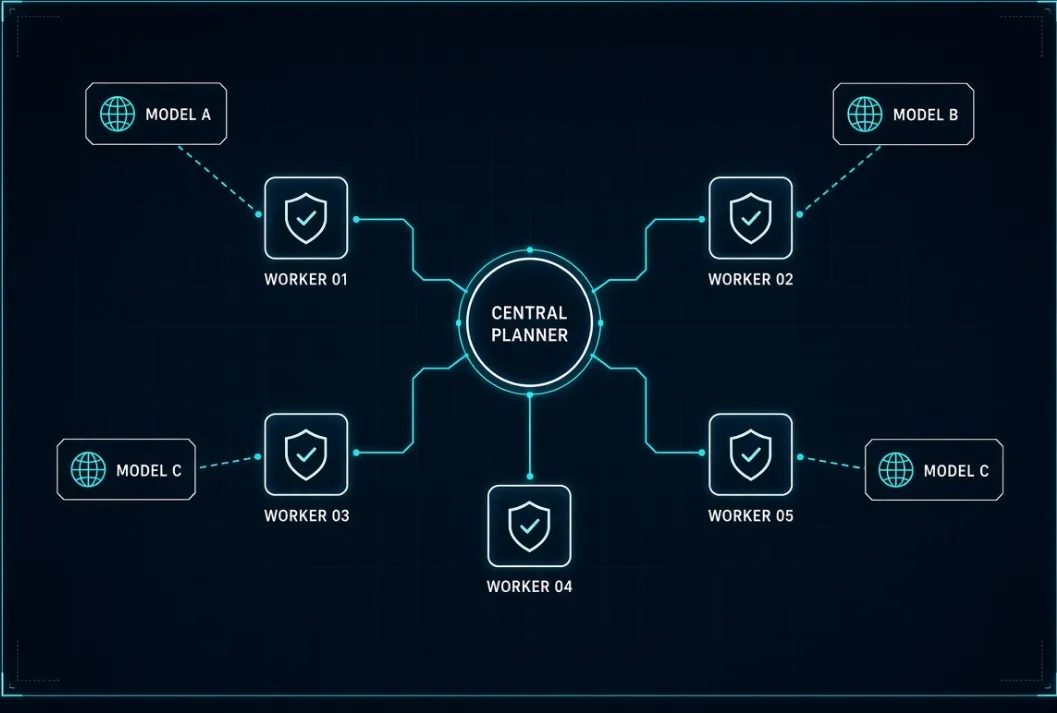
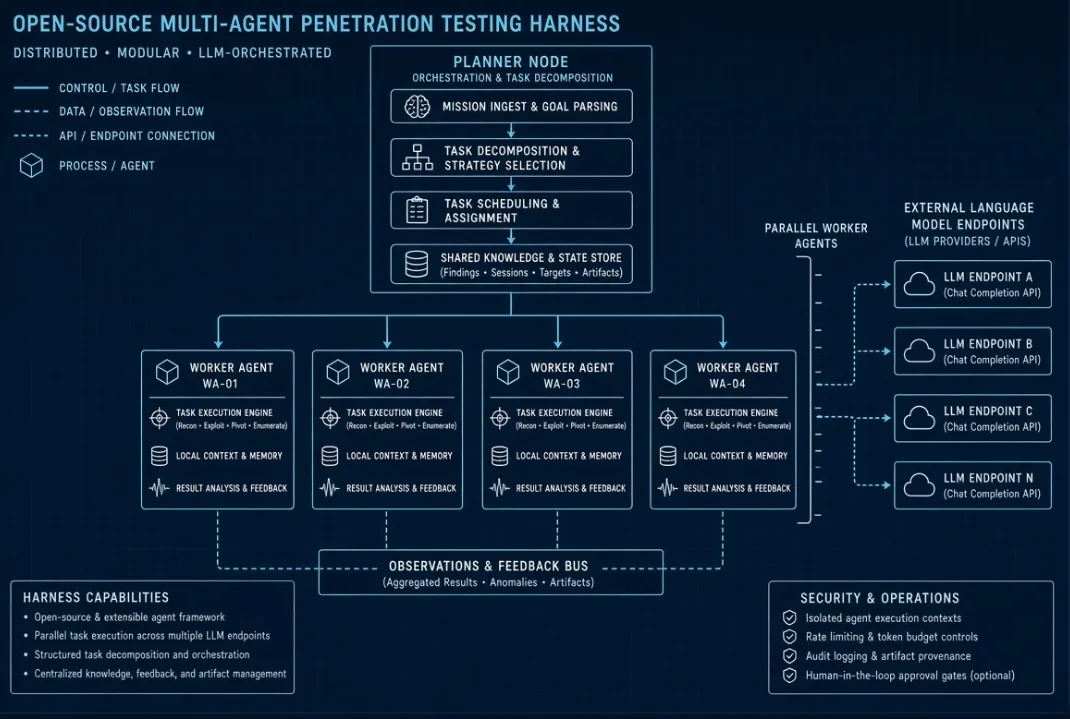
ARTEX is not a new model. It is not a state-built weapon. It is an open-source multi-agent framework written in Go that takes a natural-language goal and hands the work to specialised agents. Those agents plan, scan, run tools, check results, and continue until the objective is met or they stop. The original developer (Autumn-27) released it on GitHub in July 2026 for authorised testing. He removed the public repository on 8 October 2026 after abuse reports. Forks, localised builds, archived copies, and a commercial ARTEX PRO continue to circulate.
The framework contains no language model of its own. It connects to external ones: Claude, GPT, DeepSeek, GLM, Grok, Kimi. On attacker-controlled instances the FBI notes that Chinese models dominate, led by the DeepSeek Flash family. The stated reasons are capability, cost, and fewer observable guardrails when the request is framed as penetration testing.
The FBI states that malicious actors have used ARTEX since at least August 2026 against organisations in financial services, government, technology, defense, semiconductor, energy, healthcare, manufacturing, telecommunications, and legal sectors. Exact wording from the alert:
"ARTEX significantly reduces the time required to chain attack techniques, with some intrusions progressing from initial targeting to privileged access in under three hours. The framework enables threat actors with minimal technical expertise to conduct complex, multi-target operations simultaneously, fundamentally accelerating attack velocity and expanding operational scale."
Two campaigns are named. Financially motivated activity against South Korean financial institutions resulted in exfiltration of personal information on approximately 67,000 individuals. A supply-chain compromise of ConnectWise Cloud Backup (Microsoft attributes this to the China-state-aligned group it tracks as Storm-0940) produced attempted sign-ins against more than 2,250 downstream Microsoft 365 tenants. Microsoft has stated that a successful sign-in does not by itself confirm data theft, and that the activity did not result from a vulnerability in Microsoft products.
Censys reported 1,465 hosts exposing an ARTEX console as of 4 November 2026 (roughly 815 distinct-looking deployments after accounting for templated blocks). The FBI cites more than 1,600 publicly exposed consoles in early November, with the total higher once systems behind firewalls are included. A subset of those hosts also run other tools Censys tracks, including Cobalt Strike and other agent frameworks. Some exposed directories contained post-exploitation material.
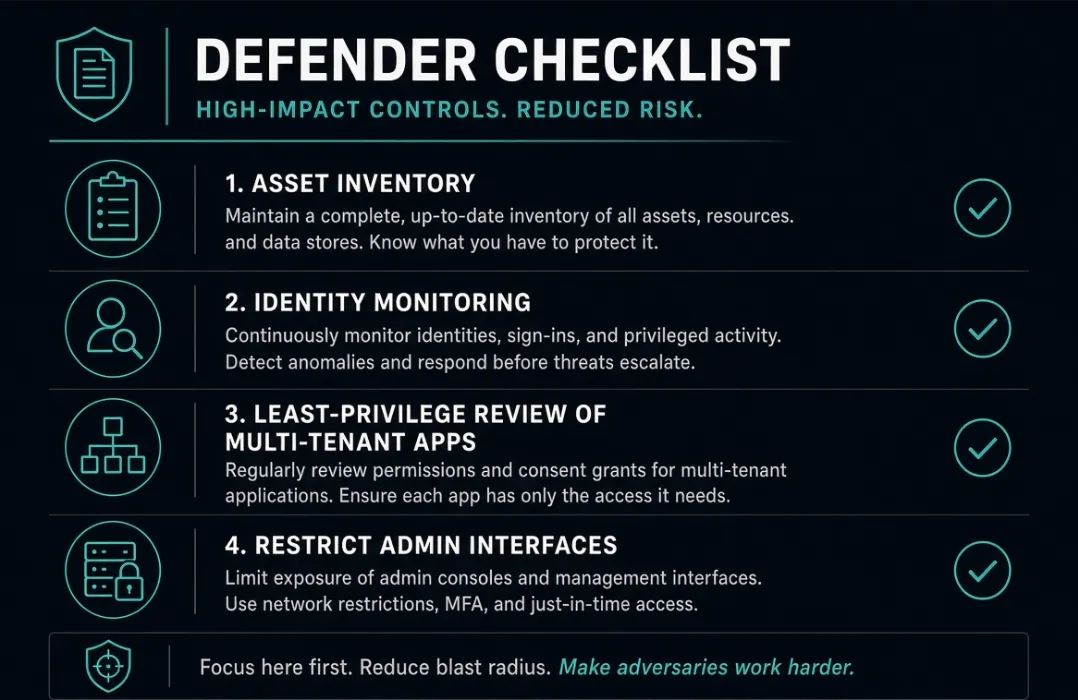
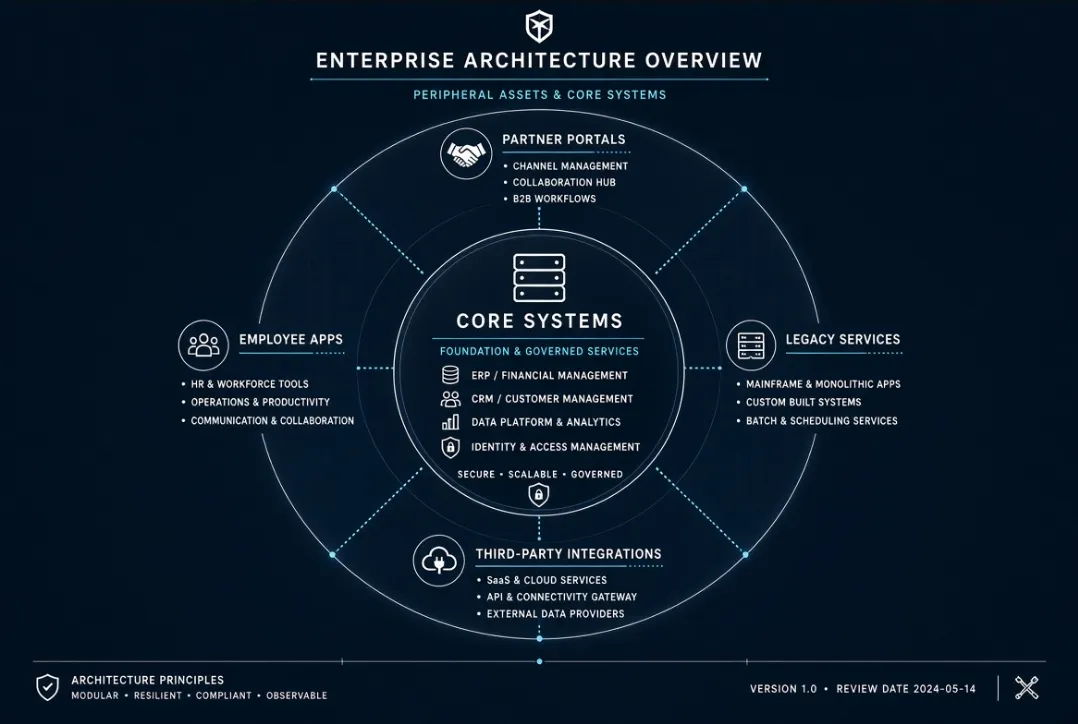
No novel zero-days are cited in the documented campaigns. The speed comes from parallel agent chaining of known techniques: scanning for exposed and peripheral systems (partner portals, employee applications, legacy services, third-party integrations), password spraying, abuse of already-granted application credentials, and weak identity controls. The FBI recommends inventory of every internet-facing application (especially the peripheral ones), restriction of cloud administration and publishing interfaces to trusted networks, least-privilege review of multi-tenant application permissions, and monitoring for high-frequency automated requests and unexpected privilege or credential changes.
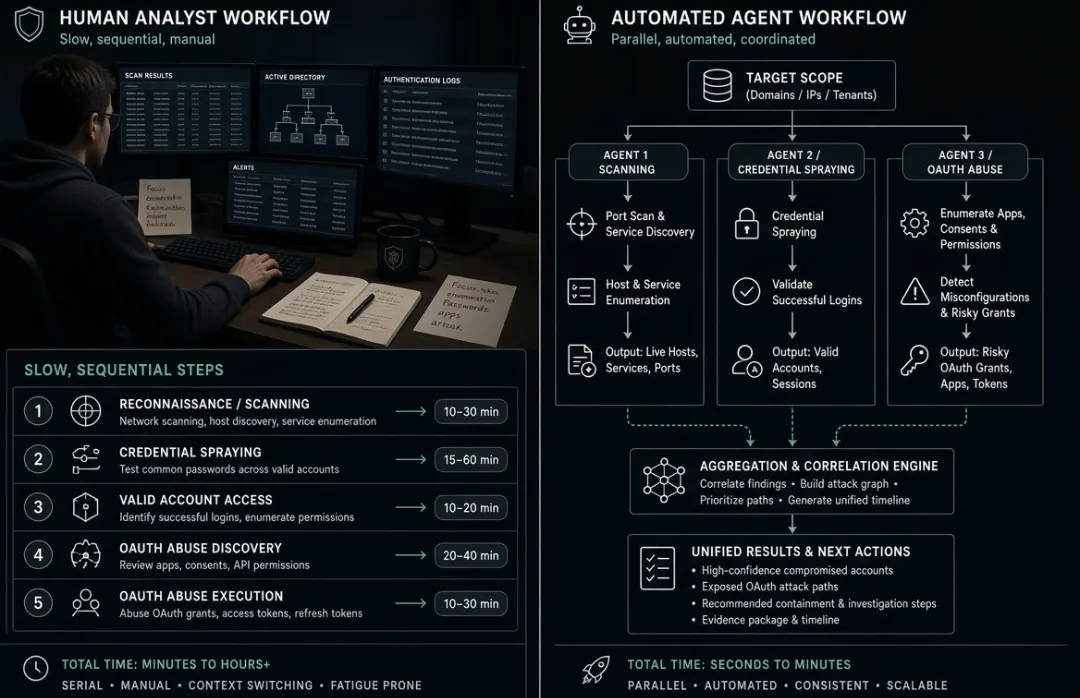
This is acceleration of existing work, not a new class of undetectable intrusion. The skill floor drops. The volume and concurrency rise. Defenders who already treat identity, third-party application trust, and the unmonitored edge as first-class problems are better positioned than those waiting for a unique signature.
Sources and scope. FBI, "FLASH-20261113-001 Threat Overview of ARTEX Autonomous Penetration Testing Framework," 13 November 2026. Censys, "ARTEX: Agentic Asbestos," 5 November 2026. Microsoft Security Blog reporting on Storm-0940 and ConnectWise (summarised across secondary coverage of the 21 October 2026 post). The Record, "FBI flash alert says Artex tool automating cyberattacks at ‘machine speed’," 16 November 2026. TechCrunch, "FBI says Artex AI open-source hacking tool used to breach networks in ‘under three hours’," 16 November 2026.
This piece treats the FBI FLASH as the primary source and the named campaigns as reported by Microsoft and CrowdStrike. It does not treat every exposed console as malicious. It does not treat "under three hours" as a universal result. It does not treat ARTEX as the sole or original cause of the Korean or ConnectWise incidents.
Clayton Bax
Published under ONYX Digital Intelligence Following the #OnyxAudit methodology.
- X: @OnyxAudit
- Email: onyxdigitalintelligence85@protonmail.com
- https://github.com/Baximus855
- @Onyx_Digital@mastodon.social
"Adjacent to true is not true."
Truth has no flag nor favour, only a standard. And it's heavy!
Editors note: I use various AI agents to fetch my research. I check, strip and write the article. Facts are partly theirs. Interpretation is mine.